There’s a particular kind of trip that only really happens in New England. You point the car north, the highway turns into a two lane road, and somewhere around the New Hampshire line the trees just start showing off. Peak color usually runs from the last week of September through the middle of October, and half the region seems to plan a weekend around it.
It’s a great trip. It’s also a different kind of driving than most people do the rest of the year, and that’s exactly why it’s worth a quick look at your car before you go.
This Isn’t Your Usual Commute
Think about what a foliage trip actually involves. Long stretches on the highway, then winding mountain roads with real elevation change. Mornings that start near freezing and afternoons that don’t. Traffic that can crawl to a stop the second you hit a scenic overlook everyone else wanted to see too. None of that resembles the daily drive to work, and a car that handles your commute just fine can still have a weak spot that only shows up under those conditions.
So before you load up the car and head for Route 100 or the Kancamagus, here’s what’s actually worth checking.
Brakes Matter More in the Mountains Than You’d Think
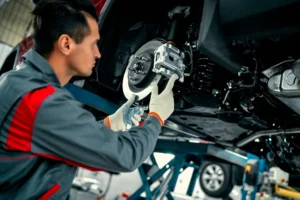
Flat highway driving is easy on brakes. Mountain roads are not. Riding the brakes down a long grade heats them up fast, and if your pads are already getting thin, that’s when you’ll find out the hard way, usually somewhere without cell service.
Get them checked before you go, especially if it’s been a while. And if you do end up on a long downhill stretch, use engine braking. If you’re not familiar with the term, it means you can downshift your gear and let the engine slow you down, rather than leaning on the brake pedal the whole way. Your brakes will thank you, and so will anyone behind you.
Tires: The One Thing Standing Between You and the Road
You’ll be on unpreditable road conditions, sometimes wet with fallen leaves, which are surprisingly slippery, closer to ice than most people expect. This is not the trip to take on worn tires.
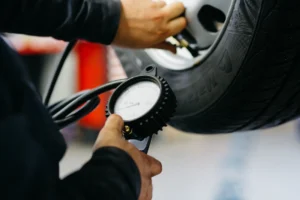
Check your tread depth and look for any uneven wear. While you’re at it, check the pressure. Mornings this time of year run noticeably colder than the afternoon, and tire pressure drops as the temperature does, so a tire that read fine at 2pm might be low by the next morning before you set out.
Your Battery Doesn’t Owe You Anything
If your battery made it through a hot summer, it may have quietly aged more than you realize, since heat wears batteries down even though the failure tends to show up later, once it’s cold enough to need real cranking power. A weak battery in a New England mountain town on a Saturday is not a fun way to spend your trip. If it’s three years or older, a quick test before you leave is worth the five minutes.
Pack for the Roads You’ll Actually Be On
A couple of practical additions for this specific kind of trip. Cell service disappears fast once you’re off the highway, so don’t count on your phone for navigation or help if something goes wrong. A basic emergency kit, a flashlight, a blanket, some water, earns its keep on backroads where the nearest gas station might be twenty minutes away. Here is another hack none one talks about: Download offline maps before you leave civilization, because the moment you actually need directions is usually the moment you have zero bars.
The Quick Version
If you’re short on time before you head out:
- Brakes checked, especially if you’re due
- Tires: tread and pressure, cold morning pressure included
- Battery tested if it’s three years or older
- Offline maps downloaded, basic emergency kit in the trunk
None of it takes long, and it’s a lot better than dealing with a dead battery outside a covered bridge with no signal.
FAQ
When is peak foliage in New England this year?
It generally runs from the last week of September through the second week of October, though it varies by elevation and location, with northern Vermont and New Hampshire typically peaking earlier than southern areas.
Why do brakes matter more on this kind of trip than a normal drive?
Mountain roads involve sustained downhill grades that heat up brakes far more than flat highway driving. Worn pads that were fine for your commute can become a real problem on a long descent.
Is it worth checking my car if it’s only a day trip?
Yes. A short trip on unfamiliar mountain roads with cold mornings and possible cell dead zones carries more risk than a similar distance on your usual routes, so a quick check beforehand is still worth it.
Heading out for leaf peeping season and want your car looked over first? Boston Auto Group in North Easton can check your brakes, tires, and battery so the only surprise on your trip is how good the foliage looks.