Have you ever looked under the hood of a car from the 1990s and then compared it to your 2022 or 2023 model? You’ll notice something immediately. Where there used to be heavy, dull-colored metal, there is now a sea of black plastic. This is quite a lot of asked questions for automotive enthusiasts.
It makes sense on paper. Plastic is lighter (which helps with gas mileage) and cheaper to manufacture. But as we’re seeing here in Boston this March, those plastic parts come with a hidden expiration date. Specifically, we’re talking about your thermostat housing, the “house” that holds our $20 Hero (check our previous blog for details).
If you’ve been following our recent guides on External Leaks, you might have wondered why your car is “sweating” coolant even if the engine hasn’t overheated yet. Often, the culprit isn’t a gasket at all. It’s a tiny, hairline crack in a plastic part that didn’t exist twenty years ago.
The “Heat-Cycle” Headache
Why does plastic fail in a place like Boston? It comes down to something called “heat cycling.”
Here is an example to understand the logic better: Imagine a plastic Tupperware container. If you put it in the microwave and then immediately in the freezer, and you do that five times a day, every day, for three years, what happens? The plastic gets brittle. It loses its flex. Eventually, it just… snaps.
Your engine is that microwave. On a typical March morning in the US, your engine starts at 30°F. Within fifteen minutes of driving toward Boston, it’s at 210°F. That constant expanding and contracting is brutal on plastic. Eventually, the plastic “warps” just enough that the rubber seal inside can’t keep the coolant in anymore.
This is often where those mysterious puddles in the driveway come from. It’s not a flood; it’s a slow, steady drip that happens every time the plastic cools down and shrinks.
The Danger of the “Hairline” Crack
The reason the “Plastic Crack” problem is so annoying is that it’s almost invisible to the naked eye when the engine is cold.
When you bring your car into Boston Auto Group, we often have to “pressure test” the system. Why? Because that crack might only open up when the engine is hot and the pressure is high.
If you ignore that tiny crack, two things happen:
- The Air Pocket: As coolant leaks out, air seeps in. Air in a cooling system is a disaster, it creates “hot spots” that lead directly to the Oil Milkshake.
- The Blowout: Plastic doesn’t usually leak “a little” for very long. Once a crack starts, the pressure of a highway drive can cause the whole housing to shatter. When that happens, you lose all your coolant in seconds.
❓ Your “Plastic Problem” Questions Answered
| The Question | The Straight Talk Answer |
| Can’t I just superglue the crack? | Please, don’t. The pressure inside your cooling system is roughly 15 to 20 PSI. Superglue or “liquid weld” will hold for about five minutes before the heat and pressure blow it right back off. |
| Are there metal replacements available? | For some popular cars (like certain Jeeps or Chevys), aftermarket companies make aluminum versions of these plastic parts. If we can find one for your car, we’ll usually recommend it so you never have to deal with this again. |
| How do I know if it’s the housing or the thermostat? | Usually, if the housing is failing, you’ll see crusty pink or green “residue” around the bolts. If the thermostat itself is dead, your temperature gauge will act crazy, but you might not see a leak. |
| Is this why my car smells sweet? | Yes! That “maple syrup” smell is often the tiny bit of coolant escaping from a cracked housing and burning off on the hot engine block. |
A Pro-Tip for 2026 Drivers
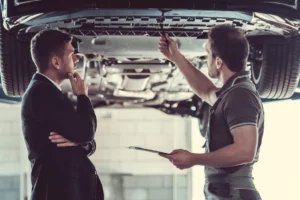
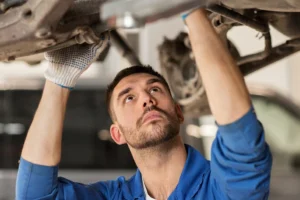
If you are coming in for a “Two-Filter” Oil Change or a general check-up, ask your mechanic to “feel” the plastic coolant pipes and housings. A pro can often feel when the plastic has become “crunchy” or brittle before it actually fails.
In the old days, we only replaced parts when they broke. In 2026, with so much plastic under the hood, we have to be more proactive. Replacing a $150 plastic housing today is much better than replacing a $5,000 engine in the near future because the plastic decided to give up on the expressway.
Here in Boston Auto Group, we’re all about the “Real Terms.” We live and work right here as your local relatives, and we know exactly what our Boston winters do to these modern machines.
📞 Think you might have a “plastic problem” under the hood? Don’t wait for the crack to become a crater. Call Boston Auto Group at 508-238-8162 or book your cooling system inspection online today!