Let us give you a fun fact: September is officially Car Care Month. The auto industry picked it for a reason. It’s the pivot point of the year, right after summer’s heat has done its damage and right before winter shows up to do its own. Which makes it just about the perfect time to spend ten minutes getting to know your car a little better.
And that’s really all this takes. Ten minutes, no tools, no expertise, standing in your driveway. You’re not trying to fix anything. You’re just looking for the early warning signs that let you deal with a small problem before it becomes a big, expensive one. Think of it as a quick physical for your car.
Here’s the walkthrough.
Pop the Hood and Check Your Fluids
Start here, because low or dirty fluids cause some of the most expensive damage there is, and checking them is genuinely easy.
Pull the oil dipstick, wipe it, dip it again, and look. The oil should be between the two marks, and it shouldn’t look black and gritty. While you’re under there, glance at your coolant reservoir, it’s a translucent tank with min and max lines, so you can check the level without even opening anything. Do the same quick eyeball on your brake fluid and windshield washer fluid. You’re not doing chemistry here. You’re just making sure nothing’s alarmingly low, which is often the first clue of a leak or a system that needs attention.
Walk Around Your Tires
Tires are where a lot of safety lives, and they tell you a lot if you actually look.
Check the tread with the old penny trick: stick a penny in the groove with Lincoln’s head pointing down, and if you can see the top of his head, your tread is getting dangerously low. Look for uneven wear too, because if one part of the tire is balding faster than the rest, that often points to an alignment or suspension issue worth catching early. And give each tire a look for anything obviously wrong, a bulge, a crack, a nail you didn’t know was there.
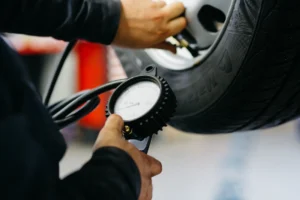
If you’ve got a tire pressure gauge, even better. Check the pressure against the number on the sticker inside your driver’s door, not the number on the tire itself. Heading into fall, this matters more, since dropping temperatures pull your pressure down.
Test All Your Lights
This one needs a friend, or a wall and a reflection, but it takes two minutes.
Walk around the car while someone works the controls, or park facing a garage door and watch. Check your headlights on both settings, your brake lights, your turn signals, your reverse lights. A burnt-out bulb is cheap and easy to replace, but only if you know about it. Driving around with a dead brake light is both a safety problem and an easy ticket, and most people have no idea theirs is out.
Look and Listen
The last part is the least technical and honestly one of the most useful. Just pay attention.
Look under the car where you normally park. Any puddles or drips? Clear water from your AC is normal. Anything colored, brown, red, green, or an oily black, is a fluid leak worth investigating. Then, next time you drive, turn the radio off for a minute and listen. New squeaks, grinds, or rattles are your car telling you something’s changing. You don’t need to diagnose it yourself. You just need to notice it, so you can mention it to a mechanic before it gets worse.
The Whole Thing, Start to Finish
If you want the checklist version to run through this month:
- Fluids: oil level and color, coolant, brake, washer
- Tires: tread with the penny test, uneven wear, pressure, any damage
- Lights: headlights, brakes, signals, reverse
- Underneath: check for colored leaks where you park
- Ears: listen for any new noises on your next drive
None of it is hard. And the point isn’t to turn you into a mechanic. It’s to help you catch the little stuff early, because in car care, early is always cheaper than late.
FAQ
Why is September a good time for a car check?
It falls right between summer heat and winter cold, so it’s an ideal moment to catch any damage the hot months caused and to make sure your car is ready for the demands of the cold ones. The industry recognizes it as Car Care Month for exactly that reason.
Can I really do a useful car check without any tools?
Yes. A visual check of your fluids, tires, lights, and any leaks takes about ten minutes and requires no tools at all. A cheap tire pressure gauge is the only thing that helps, and even that’s optional.
What should I do if I find something during the check?
You don’t need to diagnose it yourself. Note what you saw or heard, low fluid, uneven tire wear, a new noise, a leak, and bring it to a trusted shop. Catching it early is what saves you money.
Ran through the check and something looked off? Boston Auto Group in North Easton can take a closer look and tell you plainly whether it needs fixing now or can wait.