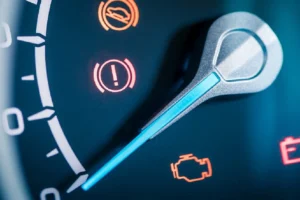
From a consumer’s point of view, this question would definitely make sense.. Your check engine light comes on, you bring the car in, and before anyone’s even fixed anything, there’s a charge on the invoice for figuring out what’s broken. It can feel a little like paying a doctor just to hear “we need to run some tests.”
Except that’s actually a pretty good comparison, because it explains exactly why the fee is there.
What You’re Actually Paying For
A diagnostic fee isn’t a fee for nothing. It’s payment for a technician’s time, expertise, and equipment spent figuring out what’s actually wrong with your car, which is a real and sometimes lengthy piece of work in its own right.
Modern cars make this more involved than people expect. A check engine light can be triggered by dozens of different issues, and pulling a code from the car’s computer is only the first step, not the answer. That code points toward a general area, not a confirmed diagnosis. From there, a technician has to test components, check wiring, sometimes drive the car, and rule things out one at a time until they land on the actual cause. That process takes real time on a real bay, with a real person doing real work. Time and expertise cost money, whether that work results in a repair or not.
Why “Free Diagnostics” Isn’t Actually Free
You’ve probably seen ads for free diagnostic checks somewhere. It’s worth understanding how that usually works, because it’s not magic.
A shop offering free diagnostics is almost always building that cost into something else, usually the price of the repair itself. So if they find a problem and you have them fix it, you’re paying for the diagnostic time either way, it’s just hidden inside the repair cost instead of shown as its own line. And if it turns out to be something minor, or you decide to get a second opinion, or you fix it yourself, that shop just did unpaid work chasing down your problem. Some absorb that cost as a loss leader. Plenty make it up elsewhere, in the shape of a repair estimate that’s padded a little to cover the diagnostic time they’re not charging for directly.
An upfront diagnostic fee is often the more honest version of the same thing. You know exactly what you’re paying, and for what, regardless of what happens after.
When It Gets Applied Toward the Repair
Here’s something a lot of people don’t realize: many shops will apply the diagnostic fee toward the cost of the repair if you move forward with them. So if the diagnosis costs $120 and you decide to have that same shop do the $600 repair, you might only pay $600 total, not $720. It’s worth asking about this directly, because it’s common practice and not every shop volunteers it.
Why This Actually Protects You
Think about the alternative. A shop that doesn’t properly diagnose a problem, and just starts replacing parts based on a guess, can end up costing you far more than a diagnostic fee ever would. Parts get swapped that didn’t need swapping. The actual problem doesn’t get fixed the first time. You pay for the wrong repair and then pay again for the right one.
The diagnostic fee is what buys you an actual answer instead of a guess. It’s the part of the process that makes sure the repair that follows is the repair you actually need, not the first thing that seemed plausible.
What to Ask Before You Agree to One
A reasonable diagnostic process should come with a few things. Ask what the fee covers and roughly how long the diagnosis will take. Ask whether it’ll be applied toward the repair if you decide to move forward. And ask for the actual finding once it’s done, in plain language, not just a code number and a shrug. A shop that can answer all of that clearly is one that’s doing real diagnostic work, not padding a bill.
FAQ
Is a diagnostic fee normal, or a sign I’m being overcharged?
It’s completely normal. Diagnosing a problem takes real technician time and equipment, and a transparent fee for that work is standard practice at reputable shops.
Will the diagnostic fee be subtracted from my repair cost?
Many shops apply it toward the repair if you have them do the work, though not all do it automatically. It’s worth asking directly before you agree to the diagnostic.
Is “free diagnostics” actually better than paying a fee?
Not necessarily. Shops offering free diagnostics typically build that cost into their repair pricing instead, so you’re often paying for it either way, just less transparently.
Got a warning light or a noise you can’t explain? Boston Auto Group in North Easton will walk you through exactly what the diagnosis covers before any work starts.