If filling up feels more painful than it did last summer, you’re not imagining it. In this economy, gas prices in Massachusetts have climbed roughly 27 percent compared to a year ago, and every trip to the pump is a reminder of it.
The good news is that a decent chunk of what determines your fuel economy has nothing to do with gas prices themselves. It comes down to how well your car is running, and most of the fixes are cheap compared to what you’re losing every week at the pump. In this blog we summarize 7 actionable steps you can do right away:
1. Check Your Tire Pressure (This One’s Free)
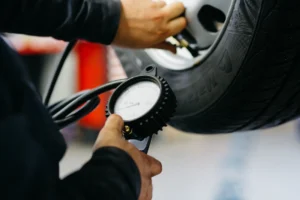
Underinflated tires create more rolling resistance, which means your engine has to work harder to move the car, which means more gas burned for the same trip. Keeping your tires properly inflated can improve your mileage by up to 3 percent, and it takes about five minutes with a cheap gauge you can keep in the glove box.
The correct pressure is on a sticker inside your driver’s side door, not the number printed on the tire itself. Check it monthly, and pay extra attention when the temperature swings, since pressure drops as it gets colder.
2. Don’t Ignore Worn Spark Plugs
This is an easy one to forget about because spark plugs don’t announce themselves the way a bald tire does. But worn spark plugs can drag your gas mileage down significantly, sometimes by as much as 30 percent in bad cases. Most manufacturers rate them for around 100,000 miles, but plenty of vehicles start showing wear well before that. If it’s been a while since anyone’s looked at yours, it’s worth asking when your next oil change is.
3. Get Your Alignment Checked
A misaligned car isn’t just a handling annoyance. It’s your engine quietly working overtime to keep the car moving straight, which shows up as reduced fuel economy along with uneven tire wear. If you’ve hit a pothole hard recently, or you’ve noticed your car pulling slightly to one side, that’s worth having checked rather than living with.
4. Swap Out a Clogged Air Filter
Your engine needs clean airflow to run efficiently, and a dirty air filter forces it to work harder to breathe. It’s one of the cheapest maintenance items on your car, usually good for a year unless you’re driving in especially dusty conditions, and skipping it is one of those small neglects that quietly adds up.
5. Don’t Brush Off That Check Engine Light
A check engine light isn’t always a big deal, but it’s also not something to drive around for months. A failing oxygen sensor, a loose gas cap, or a misfiring cylinder can all trigger that light, and all of them can hurt your fuel economy in the process, sometimes substantially. Getting it diagnosed early is almost always cheaper than letting the underlying issue linger.
6. Change How You Drive, Not Just What You Drive
This is the part that costs nothing and makes a real difference. Hard acceleration and heavy braking burn noticeably more fuel than smooth, steady driving. So does speeding on the highway: fuel economy drops fast once you’re cruising much past 50 to 60 mph, and every five mph over that is roughly like paying extra for every gallon you burn. Easing off the gas a little and giving yourself more following distance to avoid hard braking adds up over a tank, and over a year it adds up even more.
7. The Small Stuff That’s Easy to Forget
A couple of things people rarely think about: a worn gas cap seal can let air into your fuel system and reduce efficiency, and it’s a five dollar fix. Excess weight in your trunk, whether it’s tools you never use or just clutter, makes your engine work harder than it needs to. Neither one takes long to check.
FAQ
What’s the single biggest maintenance item for fuel economy?
Tire pressure is usually the easiest win since it’s free to check and directly affects rolling resistance. Beyond that, staying current on oil changes, air filters, and spark plugs matters more than people expect.
Is it worth getting an alignment just for gas mileage?
If you’ve hit a pothole or noticed pulling, yes. Beyond the fuel savings, it also extends the life of your tires, so it tends to pay for itself either way.
Does driving style really change fuel economy that much?
Yes, more than most people assume. Smooth acceleration and staying off the brakes as much as possible can noticeably improve how far a tank of gas actually takes you.
If it’s been a while since your car had a real look under the hood, Boston Auto Group in North Easton can check the basics that affect your mileage and help you stop losing money at the pump.