You’ve probably been told to “follow your maintenance schedule” more times than you can count. Here’s the problem with that advice: nobody ever explains where the schedule is, how to read it, or what any of it actually means. So most people just nod, ignore it, and hope for the best.
Let’s fix that. Because once you understand how your car’s maintenance schedule works, “overdue” stops being a vague guilt trip and becomes something you can actually check and act on.
The Schedule Isn’t a Suggestion Someone Made Up
First thing worth knowing: your maintenance schedule isn’t generic advice pulled from the internet. It’s specific to your exact car, written by the people who built it, based on how that particular engine and its parts are designed to wear.
It lives in your owner’s manual, usually in a section called something like “maintenance schedule” or “service intervals.” If you’ve never opened that glovebox booklet, that’s where the real answers are. And if the manual’s long gone, the same information is available for pretty much every vehicle, so a quick ask at your shop or a search by your car’s year, make, and model will turn it up.
The schedule is organized by mileage and time, whichever comes first. That last part trips people up. Even if you barely drive, some services are still due on a time basis, because oil and fluids break down whether you’re racking up miles or not.
What Tends to Come Due, and When
Every car is a little different, so treat these as the general rhythm rather than exact rules for your specific vehicle. But the pattern usually looks something like this.
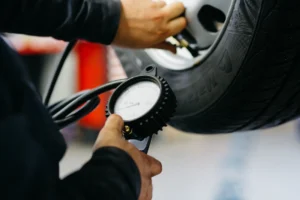
The frequent stuff comes around every several thousand miles: oil and filter changes, tire rotations, and a general inspection of the basics. This is the routine heartbeat of car care, the low cost work that quietly prevents the expensive stuff.
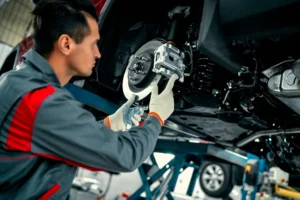
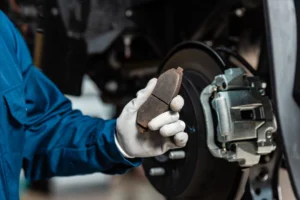
Around the middle mileages, in the tens of thousands, more items start showing up. Air filters, brake inspections, and certain fluids come due for a look or a change. Brakes especially tend to need attention somewhere in this range, though it depends heavily on how and where you drive.
Then there are the bigger milestone services, the ones that land at higher mileage and cost more because they’re doing more. This is where things like spark plugs, timing components, and major fluid flushes come into play. These are the services people are most tempted to skip because of the price tag, and also the ones where skipping causes the most damage. A neglected timing belt, for example, isn’t an inconvenience. It’s a catastrophic engine failure waiting for a bad day.
Why “Overdue” Is Really About Risk, Not Rules
Here’s the mindset shift that makes all of this click. A maintenance schedule isn’t a set of rules you follow to be a good rule follower. It’s a risk map.
Each interval exists because that’s roughly when a given part starts moving from “fine” toward “failing.” Being a little past an oil change is low risk. Being way past a timing belt interval is high risk, the kind that can total an engine. “Overdue” isn’t one single thing. Some overdue items are a gentle nudge to book an appointment soon. Others are a flashing warning that you’re gambling with a very expensive repair. Knowing which is which is the whole game.
That’s exactly where a good shop earns its keep. Not by telling you everything is urgent, but by looking at your specific car, its mileage, and its history, and telling you honestly which overdue items need attention now and which can safely wait a bit.
How to Actually Use This
You don’t need to memorize your entire schedule. You need to do three simple things.
Know roughly what mileage your car is at, and glance at the manual to see what services cluster around that number. Keep a rough mental note, or better, a written one, of when you last had the big items done. And when a shop recommends a service, ask where your car falls in its schedule for that item, so you understand whether it’s a “now” or a “soon.” That’s it. That’s the difference between driving blind and driving informed.
FAQ
Where do I find my car’s maintenance schedule?
In your owner’s manual, usually under “maintenance schedule” or “service intervals.” If you don’t have the manual, the information is available by your vehicle’s year, make, and model, and any good shop can pull it up for you.
What does “whichever comes first” mean on a maintenance schedule?
Services are due based on mileage or time, and you act on whichever milestone you hit first. Even low mileage drivers need certain services on a time basis, because oil and fluids degrade with age regardless of miles.
Which overdue services are the most important to catch up on?
The ones tied to major engine damage if neglected, like timing components and certain fluids, along with anything safety related like brakes. A shop can look at your specific car and tell you which overdue items are genuinely urgent versus which can wait.
Not sure what your car is actually due for?Boston Auto Group in North Easton can check your vehicle against its schedule and tell you plainly what needs doing now and what can wait.